
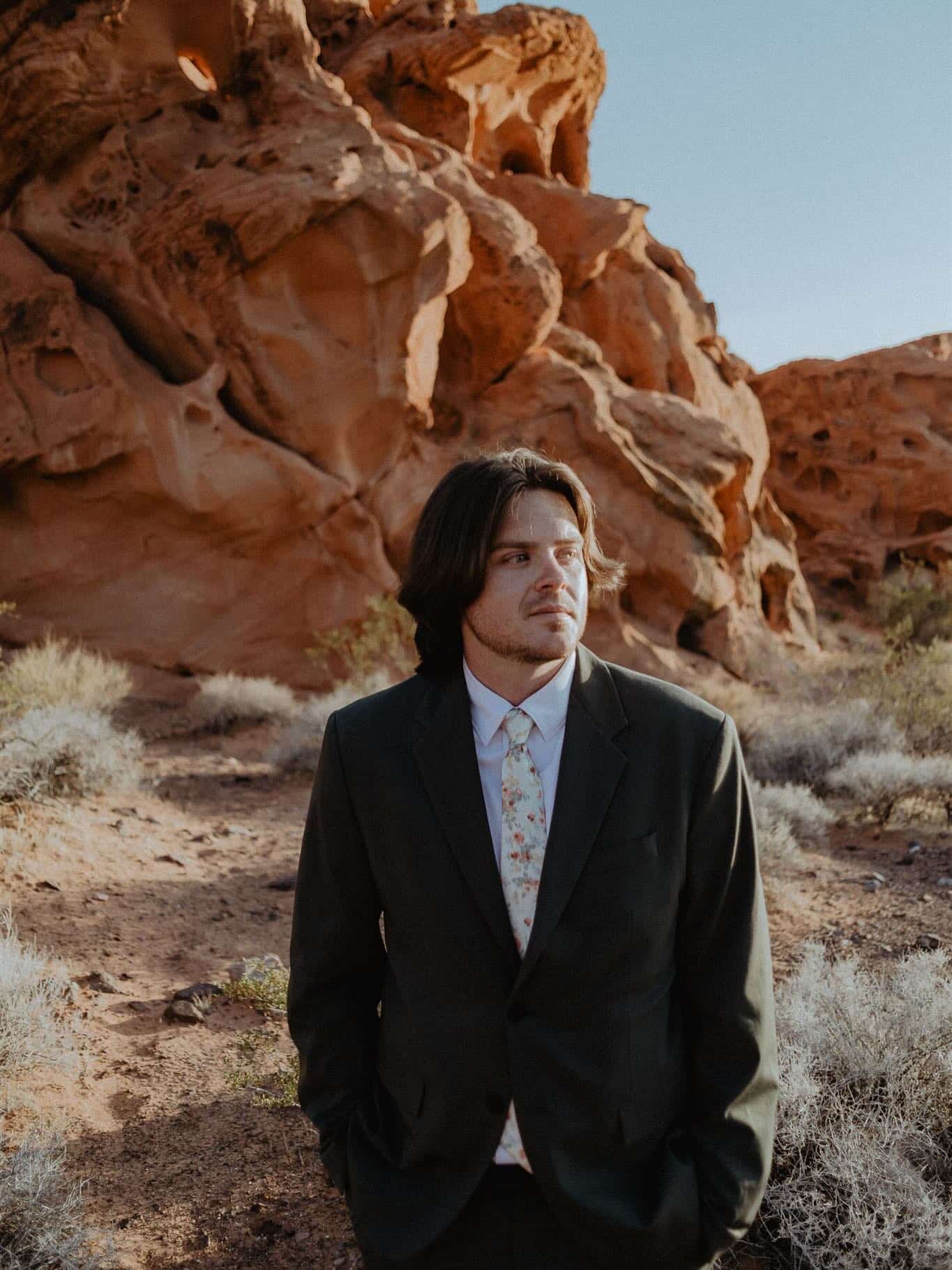
Las Vegas weather is almost always gorgeous — but summer heat and monsoon storms are real. A solid backup plan keeps your day on track no matter what the sky does.
Understanding Las Vegas Weather by Season
Las Vegas sits in the Mojave Desert, which means most of the year delivers clear skies and low humidity — ideal for outdoor photos. The real challenges come in two windows: summer heat (June through mid-September, when afternoon highs regularly top 105°F) and the North American Monsoon (mid-July through mid-September), which can bring fast-moving thunderstorms and brief but heavy rain.
- June–July: Extreme heat. Sunrise and late-afternoon light are far more bearable than midday.
- Aug–Sept: Heat plus monsoon risk. Storms usually build in the afternoon and clear quickly.
- Oct–May: Generally ideal. Occasional cold snaps December–February; mild and dry otherwise.
Outdoor Ceremony: Build a Real Backup Into Your Contract
If you book an outdoor venue — Springs Preserve, Red Rock Canyon, Seven Magic Mountains, or a hotel courtyard — ask the venue directly: "What is your indoor backup space, and is it included?" Many venues charge extra for the ballroom or terrace switch. Nail this down in writing before you sign.
For park locations like Valley of Fire or Floyd Lamb Park, there is no indoor fallback on-site. Your backup has to be a separate venue or your ceremony time has to shift. Parks also require permits applied for weeks in advance, so a same-week rain-date switch is rarely possible.
Heat Management Strategies That Actually Work
The best protection against extreme heat isn't a backup location — it's smart scheduling. A 6:00 or 6:30 PM ceremony in July puts you 90 minutes past peak heat and catches the golden-hour light that makes Las Vegas desert photos look spectacular. Sunrise sessions (5:30–7:30 AM) are cooler and beautifully lit.
- Ask your venue about shade structures, misting fans, and water stations — these are common in Las Vegas and shouldn't cost extra.
- Choose natural fabrics. Linen and lightweight satin breathe; heavy ballgowns become miserable at 108°F.
- Keep outdoor time to 30–45 minutes max in summer, then move the reception indoors.
- Let your photographer know your heat plan — we time portrait sessions to avoid the worst of the afternoon sun.
Monsoon Storms: Fast and Unpredictable
Las Vegas monsoon storms are fast movers. A clear sky at 3 PM can produce lightning and heavy rain by 4:30 PM, and the storm is often gone by 6 PM. The flip side: dramatic cloud formations before and after a storm are some of the best photo backdrops you will ever find in the desert.
Practical steps if you are getting married August or September: check the National Weather Service forecast the morning of your wedding, have a group text thread ready to notify guests of any time shift, and designate one person (not the couple) to monitor radar. Most chapel-based ceremonies have a covered or indoor option that can absorb a two-hour delay gracefully.
Chapels vs. Outdoor Venues: A Real Comparison
Chapel venues like Chapel of the Flowers, The Little Church of the West, and Vegas Weddings have climate-controlled interiors with no weather exposure at all — your ceremony proceeds regardless of conditions outside. The trade-off is that outdoor photo opportunities happen after, at a location of your choosing.
If you love the idea of an outdoor ceremony but want weather security, consider a hotel with indoor ceremony spaces and outdoor gardens, like the JW Marriott Summerlin or Red Rock Casino Resort. You keep the option of outdoors while having an instant indoor fallback 30 seconds away.
Our elopement photography packages are designed for flexibility — we know the valley well enough to pivot locations quickly if conditions change.
What Your Photographer Needs to Know
Tell your photographer your backup plan, your backup location, and who has the authority to make the call. Ideally that decision is made by noon on the wedding day — not when guests are already in their seats and rain is starting. We can recommend specific timing shifts and alternate outdoor spots that work in different lighting conditions. The more we know in advance, the smoother any pivot becomes.